Expert interview
Autonomous Enterprise
Start with the future, then compare to the past
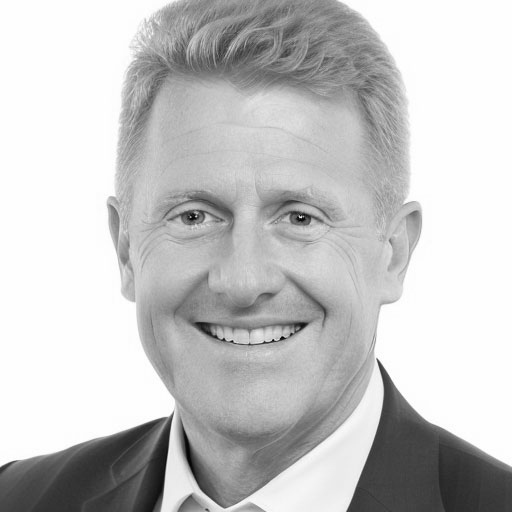
In this interview, Robert Cummings shares his thoughts on SAP’s vision of Autonomous Enterprise, the role of AI agents in the SAP context, and why companies should approach their transformation by starting with the end goal in mind.
At Sapphire, SAP placed a strong emphasis on Autonomous Enterprise. The vision is for business processes to become smarter, more automated, and increasingly agent-driven.
For many SAP customers, this vision comes at a time when they themselves are still in the midst of their own transformation: ECC is still in use in some areas, S/4HANA projects are being planned or implemented, cloud strategies are taking shape, data quality remains a concern – and at the same time, the pressure to meaningfully integrate AI into business processes is growing.
Robert Cummings was at SAP Sapphire. In this interview, he explains why Autonomous Enterprise isn’t a reason to panic, but rather an important vision for companies that want to future-proof their SAP landscape.
Robert, you went to SAP Sapphire. Was Autonomous Enterprise high on the agenda there?
The topic was very much in the spotlight – and I found it fascinating how clearly SAP has now articulated this vision. In a sense, it’s not entirely new. SAP has been on this journey for years.
In the past, people talked about the “Intelligent Enterprise” – that is, using analytics, real-time data, and better insights to gain a deeper understanding of what’s happening within the company. To me, the “Autonomous Enterprise” is the logical next step in that evolution.
What’s new, above all, is how clearly SAP brings together the various layers: applications, data, business AI, agents, and governance. Much of the raw material for this future is already in place today. But it needs to be better structured and integrated. The real question for customers, therefore, is: How can I realistically get there?
How do you feel about this vision: Is it truly new – or is it more like the next step in what SAP has been pursuing for some time?
For me, it’s more like the next step. SAP has built up many components over the past few years: S/4HANA, BTP, Datasphere, Analytics, and Business AI. Now, these components are being more closely aligned toward a common vision.
However, that doesn’t mean companies can simply “switch on” an “autonomous enterprise” overnight. Autonomous Enterprise is not a reality that’s already here. It’s a vision. And that’s precisely where its value lies: it shows the direction in which SAP systems, business processes, and corporate management are evolving.
I think it’s important that companies don’t dismiss this vision as just a marketing buzzword. You don’t have to jump on every new trend right away, but you should understand which capabilities will be important in the future: better data, clearer processes, greater automation, governance, and the ability to meaningfully integrate AI into business operations.
What does this mean for companies that are currently in the midst of S/4HANA, cloud, or modernization projects?
Many customers are essentially trying to achieve several things at once. They are modernizing their ERP landscape, exploring the path to the cloud, and at the same time recognizing that AI is becoming a reality. The question then is: How do I bring these areas together in a meaningful way?
The transition from ECC to S/4HANA is not a standard technical upgrade. Anyone who views S/4HANA merely as a technical successor platform runs the risk of carrying over old structures into a new environment. The architecture has changed. Processes, data models, and reports function differently.
That is why it is not enough to simply take the existing landscape “one step further.” Doing so only partially taps into the potential of the new architecture. Some things that were necessary in the past no longer make sense from a technical or professional standpoint today.
Many companies are already testing AI. Why do the actual benefits often fall short of expectations in the SAP context?
Many customers are already using AI in some capacity. But many are also disappointed with the results. I think this is often because AI is viewed as some kind of magic dust: you sprinkle it over existing processes and expect everything to improve. But that’s not how it works.
AI only realizes its full potential when it is integrated into the business context: processes, data, roles, decisions, and governance. Especially in the SAP environment, simply implementing any AI tool is not enough.
The question is: Where does AI truly add value in a specific business context? Where can it help prepare decisions? Where can it take over repetitive tasks? And where is human judgment still needed?
What exactly do you mean by “AI is not magic dust”?
What I mean is the expectation that AI will automatically solve existing problems just because it’s been integrated somewhere. That’s a dangerous oversimplification.
If processes are unclear, data doesn’t align, or responsibilities are unclear, AI won’t simply eliminate these problems. On the contrary, it can make them more apparent or even exacerbate them.
That’s why it’s important to first understand which specific use case makes sense. What decision does the system need to support? What data does the system need to do that? Who is responsible? What rules apply? And how can we ensure that the reasoning behind a result is transparent?
Especially for agents, this is crucial. Agents need context. They must be integrated into processes, data, roles, and governance. Without this context, there is no real support – only added complexity.
Therefore, AI shouldn’t just be evaluated on slides; it should be tested in real-world scenarios. That’s exactly what REALTECH aiLAB is all about: making AI tangible in an SAP context, evaluating practical use cases, and identifying early on where your own processes, data, and responsibilities are ready – and where they’re not.
When SAP talks about “autonomous,” how much human involvement will there still be in the process in the future?
Autonomous doesn’t mean without people. I don’t think companies will operate entirely without people anytime soon. That’s not the point, anyway.
The point is that systems can handle routine decisions and recurring tasks – with high quality and in collaboration with people.
The importance of humans is not disappearing. It is changing. People steer, review, prioritize, and step in when experience, responsibility, and judgment are required.
Many SAP customers prefer to take a wait-and-see approach when it comes to major technological issues. Is that still a good strategy when it comes to AI and Autonomous Enterprise?
In the past, it was sometimes possible to wait and see. Many companies also waited a long time before adopting S/4HANA. This is understandable, because such transformations are complex.
But the pressure has changed. Markets are moving faster. Internal stakeholders expect better data, faster decisions, and a clear answer to the question of what the company is doing with AI.
You don’t have to jump on every announcement right away. But simply waiting three years until things become clearer won’t be a viable strategy for many companies. You need to actively engage with the vision and assess your own capabilities.
You say, “Start with the future and then compare it to the past.” What does that mean specifically for SAP transformations?
Many SAP projects begin with a lengthy analysis of the existing landscape: What in-house custom developments are in place? What reports? Which special processes? Customizing settings? All of this is important. But if this perspective dominates too early on, the future ends up being planned based on the past.
I like to use the image of a horse-drawn carriage to illustrate this. If you switch from a horse-drawn carriage to a car and start by analyzing the carriage, you’ll quickly conclude that the horse is the most important element—after all, that’s where the energy comes from. But then there’s a risk that you’ll carry that horse over into the new world.
Applied to SAP, this means that not everything that seems important today will still be useful in an S/4HANA-, cloud-, or AI-driven future. Some reports, workarounds, or customizing decisions were necessary in the old architecture. In the new world, they may be redundant or even counterproductive.
That doesn’t mean rejecting the past outright. It means starting with a vision – and then consciously deciding, process by process, which elements of the current landscape truly belong in the future.
What would be your top advice for companies looking to future-proof their SAP landscape right now?
Don’t panic. But don’t just sit back and wait either. Autonomous Enterprise isn’t something you can simply turn on. It’s a vision. But it clearly shows the direction in which SAP systems, business processes, and corporate management are heading.
Anyone undergoing transformation today shouldn’t just ask: How do we move from ECC to S/4HANA? I would even go so far as to say that this might be the wrong question. I believe that in the ERP environment, customers must simultaneously consider how to view the new architecture of S/4HANA, the move to the cloud, and Agentic AI in context. The right question is: How can I use this transformation to get closer to Autonomous Enterprise?
Over time, we have often seen that an ERP transformation can be viewed either as a technical transformation or as a business transformation. The former has more often led to disappointing results, while the latter has yielded significantly greater value.
What capabilities do we want to build with this? Which processes should be faster, more transparent, or more automated in the future? What data, tools, and decisions need to come together to make this happen?
So, Autonomous Enterprise is less of a technical goal and more of a business objective. Autonomous Enterprise doesn’t start with complete autonomy. It starts with direction. With a realistic vision. And with a willingness to make the future tangible within one’s own context.
The next logical step is therefore often to define a concrete vision: What might a future-proof SAP landscape look like in the context of your own processes? What remains valuable – and what is simply a burden? If you want to assess this for your own SAP transformation, SmartTransform can help you take a pragmatic first look at a possible vision.
How can you kickstart an SAP transformation more quickly, more tangibly, and with less risk? In this webinar, REALTECH and LeapGreat will demonstrate how AI can help clarify the path to S/4HANA sooner and develop realistic roadmaps for the transformation.
On-Demand Webinar
AI meets SAP Migration