
SAP Cloud ALM: An Overview of Features, Use Cases, and Limitations

With SAP Cloud ALM, SAP is setting new standards for application lifecycle management. In this article, we take a look at the functions, benefits and challenges of SAP Cloud ALM and how it compares to SAP Solution Manager.
TL;DR – Key facts in brief

  • SAP Cloud ALM is SAP's strategic ALM platform for implementation, operations, and service.
  • The solution is particularly relevant for cloud and hybrid scenarios and, depending on the use case, can also integrate supported ABAP and on-premises systems.
  • SAP Cloud ALM is not a complete 1:1 replacement for all the features of SAP Solution Manager.
  • Companies should review their requirements, particularly with regard to change, release, and transport processes.
  • If standard functions are not sufficient, supplementary solutions for SAP Change and Transport Management may be useful.

What is SAP Cloud ALM?

SAP Cloud ALM is SAP’s cloud-based ALM platform for the implementation, operation, and ongoing development of SAP solutions. SAP currently organizes the platform around three key areas: Implementation, Operations, and Service. This approach goes beyond mere project organization or monitoring; it represents a broader strategy for governance, transparency, and collaboration in modern SAP environments.

Important to note: SAP Cloud ALM is not intended to be a complete, one-to-one replacement for all SAP Solution Manager functions. SAP is taking a more standardized, cloud-native approach here, which is being continuously expanded. For many companies, this is a sensible step forward – but for very specific processes, it may mean that existing SolMan logic cannot be carried over unchanged.

SAP Cloud ALM

Who is SAP Cloud ALM relevant for?

SAP Cloud ALM is particularly relevant for companies that want to future-proof their SAP landscape and use a centralized ALM platform provided by SAP to do so. The solution is primarily aimed at organizations with cloud or hybrid environments. At the same time, depending on the scenario, supported on-premise and ABAP systems can also be integrated. The key point is that the platform itself remains a cloud service, even if not all connected systems run in the cloud.

SAP Cloud ALM is most suitable for:

  • Companies using S/4HANA Cloud (Public or Private Edition)
  • Organizations that use or are implementing SAP BTP Services
  • Teams migrating from SAP Solution Manager and looking for a cloud-based alternative

What features come with SAP Cloud ALM?

SAP Cloud ALM supports key tasks throughout the application lifecycle management process. Its functionality can be divided into three areas: implementation, operations, and service.

Implementation

In the area of implementation, SAP Cloud ALM supports requirements, tasks, documentation, testing, and deployment-related processes in SAP projects, among other things. This area is particularly crucial for companies that want to manage SAP implementations or transformation projects in a more structured way. In recent releases, SAP has further expanded requirements management, documentation, and project-related control functions in particular.

Operations

The Operations area focuses on transparency in day-to-day SAP operations. SAP Cloud ALM supports monitoring of applications, integrations, processes, and technical statuses, among other things. It also includes alerting and business process monitoring to identify issues earlier and manage operational workflows more effectively.

Service

SAP also classifies SAP Cloud ALM under the “Service” category. This refers to service-related processes within the SAP context and integration with adjacent systems. This is important for understanding the classification: SAP Cloud ALM is therefore not automatically a full-fledged replacement for specialized ITSM platforms with their own service desk.

SAP Cloud ALM vs. Solution Manager

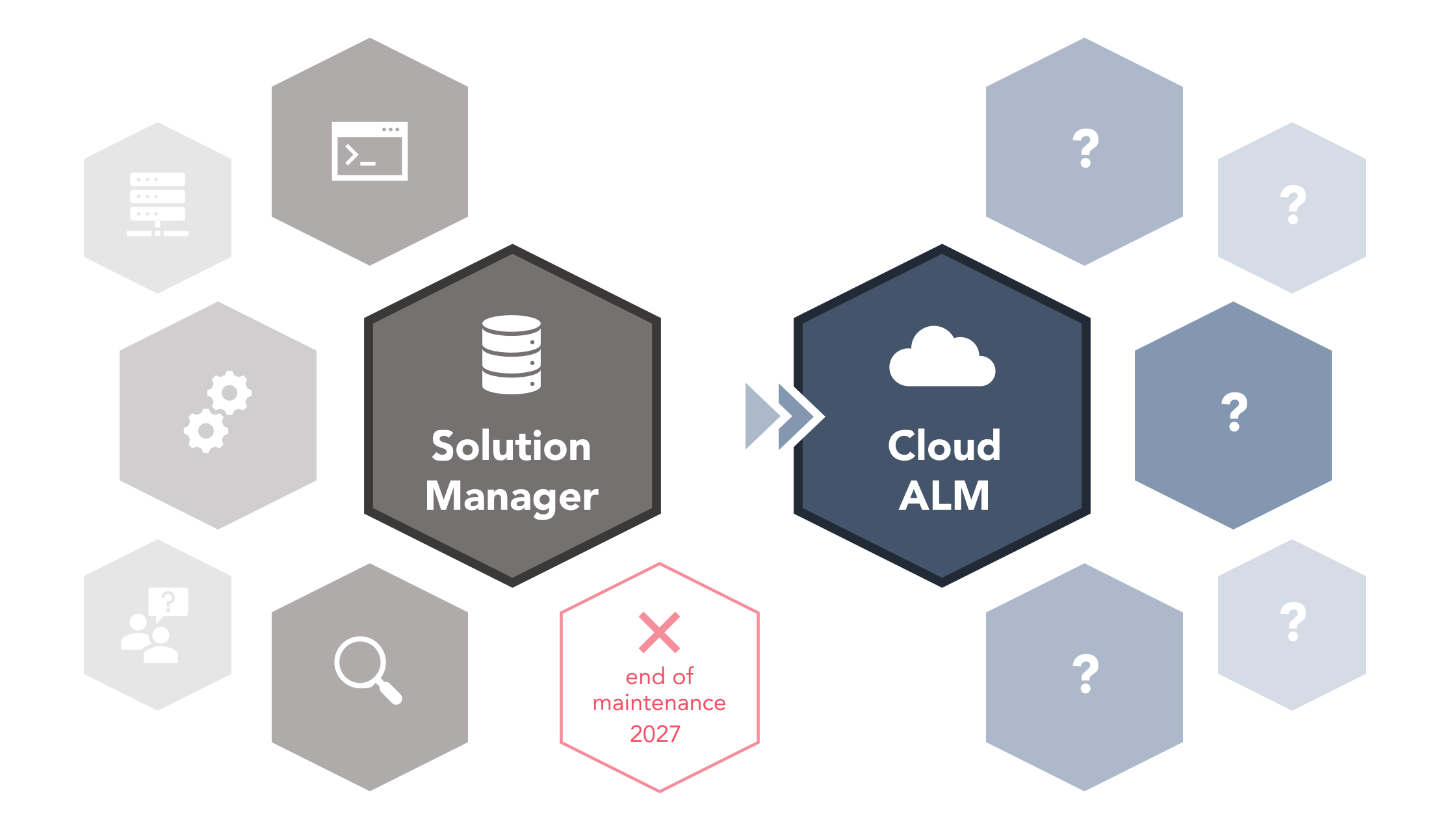
SAP Cloud ALM is considered SAP’s strategic platform of the future in the ALM landscape. Nevertheless, the solution is not a complete 1:1 replacement for all functions of SAP Solution Manager. Companies should therefore not merely think in terms of successor categories, but rather assess, based on their actual processes, which requirements will need to be met in the future. Against the backdrop of the end of support for SAP Solution Manager in 2027, many companies are therefore reevaluating their future ALM strategy.

Aspect SAP Cloud ALM SAP Solution Manager
Strategic Role SAP’s central ALM platform for the future An established ALM platform that has evolved over time
Operating Model Cloud service provided by SAP On-premise solution operated in-house
Target Vision Standardized, cloud-native ALM approach Broad range of functions developed over many years
Further Development Continuously expanded by SAP Mainstream maintenance until the end of 2027, with partial extended maintenance until the end of 2030
Implementation & Operations Less infrastructure and maintenance effort Higher internal effort for operations and maintenance
Monitoring Particularly strong for cloud and hybrid scenarios Comprehensive traditional monitoring functions
Change & Transport Management Deployment and transport orchestration available, but not identical to ChaRM ChaRM as an established reference process
ITSM / Service Desk No classic service desk out of the box More strongly embedded in traditional SolMan processes
Suitability Particularly relevant for cloud and hybrid landscapes Strong in mature on-premise environments

What are the limitations of SAP Cloud ALM?

SAP Cloud ALM covers many key ALM tasks. In practice, however, there are limitations that may be more or less significant depending on the specific objectives.

  • Kein vollwertiger Service Desk: SAP Cloud ALM bringt keinen vollständigen Out-of-the-box-Service-Desk im Sinne spezialisierter ITSM-Plattformen mit. Stattdessen setzt SAP auf Integrationsszenarien und Adapter für externe Systeme.
  • Change and deployment processes are not identical to ChaRM: SAP Cloud ALM supports release and deployment management, but does not map the classic ChaRM approach exactly. This can be particularly relevant when dealing with specific requirements for approvals, transport control, or integrated change processes.
  • Standardization over maximum flexibility: SAP Cloud ALM’s standardized approach makes sense in many scenarios. However, when dealing with highly specific process requirements, existing ITSM tools, or complex transport and approval workflows, additional customization or integration may be required.

For companies with particularly demanding requirements in SAP Change and Transport Management, it may therefore make sense to supplement SAP Cloud ALM in a targeted manner – rather than attempting to handle everything within a single platform.

What role does SAP Cloud ALM play in Change and Transport Management?

SAP Cloud ALM offers capabilities for change enablement, deployment orchestration, and – depending on the landscape – integration of transport processes. In implementation scenarios, the platform utilizes features that enable changes to be tracked as they move through a landscape. For supported ABAP and private cloud scenarios, integration with the Change and Transport System (CTS) is also possible.

However, when compared to established SAP ChaRM processes, it becomes clear that SAP Cloud ALM has a different focus and does not simply replicate traditional release and transport workflows.

In practice, limitations become apparent in:

  • Multi-stage transport landscapes with customized approval processes
  • Management of interdependencies between transport orders
  • Automated rollbacks and retry scenarios
  • Consistent governance across on-premises and cloud environments

Why should you consider alternatives to SAP Cloud ALM?

As SAP’s strategic ALM platform, SAP Cloud ALM serves as a valuable component for many companies. In practice, however, the standard approach is not always sufficient – especially when change and transport management need to be mapped in a particularly detailed, flexible manner that closely aligns with existing processes.

Alternatives become particularly relevant when:

  • The focus is on change and transport management
  • existing ITSM tools such as ServiceNow or Jira should remain the leading solutions
  • Cloud, on-premises, and hybrid scenarios must all be supported
  • the goal is to keep implementation and operating costs low.

In this context, REALTECH SmartChange is particularly relevant as a specialized solution for SAP Change and Transport Management – for companies that need greater flexibility, reduced complexity, and easy integration in this specific area. Especially when established release and transport processes are to be replaced or modernized, it is worth considering an alternative to SAP ChaRM.

Is SAP Cloud ALM not enough?

If SAP Cloud ALM doesn’t meet all your change and transport management needs, it’s worth looking into alternatives.

FAQs: Cloud Application Lifecycle Management

Cloud ALM (Application Lifecycle Management) is a cloud-based solution that helps companies manage and optimize their SAP applications. It offers features such as real-time monitoring, test management, troubleshooting, change management, and seamless integration with other SAP solutions.

Yes, SAP identifies cloud and hybrid customers as its primary target group and also supports certain on-premise-only scenarios within the scope of its licensing terms.

SAP strategically positions Cloud ALM as a key solution for the future in the ALM domain. Nevertheless, the platform does not automatically replace all existing SolMan functions on a one-to-one basis.

Not as a full-fledged ITSM system in the traditional sense. SAP refers here to integrations and adapters for external systems.

Not necessarily. For many companies, SAP Cloud ALM is part of their ALM strategy, while specialized solutions such as SmartChange are also being evaluated for change and transport management.