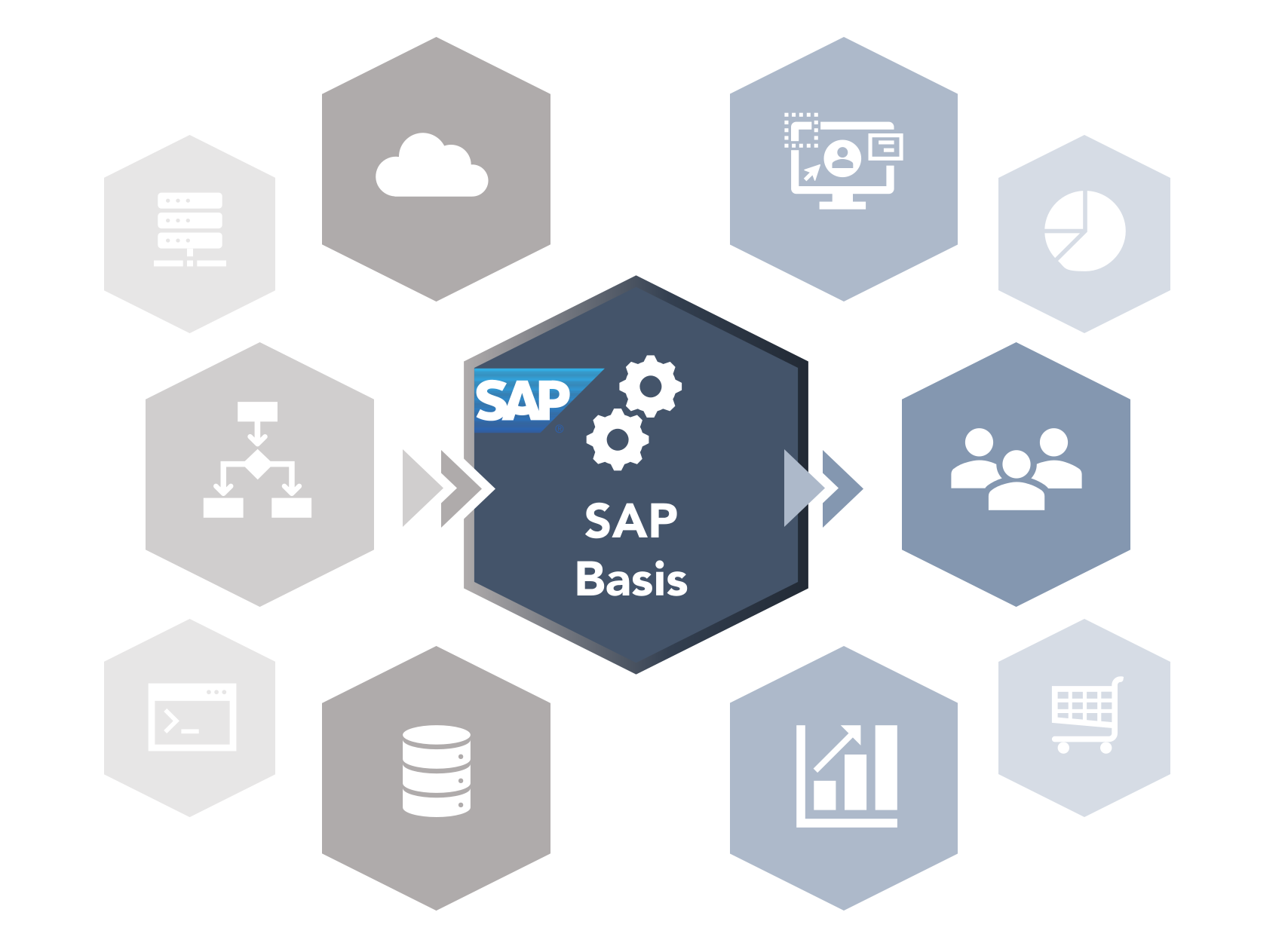
SAP Basis is the technical foundation of all SAP systems and acts as middleware that connects hardware, operating systems and SAP applications. Its main task is to ensure the reliable, flexible and efficient operation of SAP systems in the company.
As middleware, SAP Basis enables the integration and interoperability of various SAP modules such as FI (Financial Accounting), CO (Controlling), MM (Materials Management) and SD (Sales and Distribution). It handles administrative tasks such as system installation, updates, user administration, performance tuning and security management.
Modern SAP Basis administration also includes topics such as cloud integration, automation and SAP HANA optimization. SAP Basis uses specialized tools and monitoring mechanisms to ensure that companies can operate their SAP systems efficiently and in a future-proof manner.
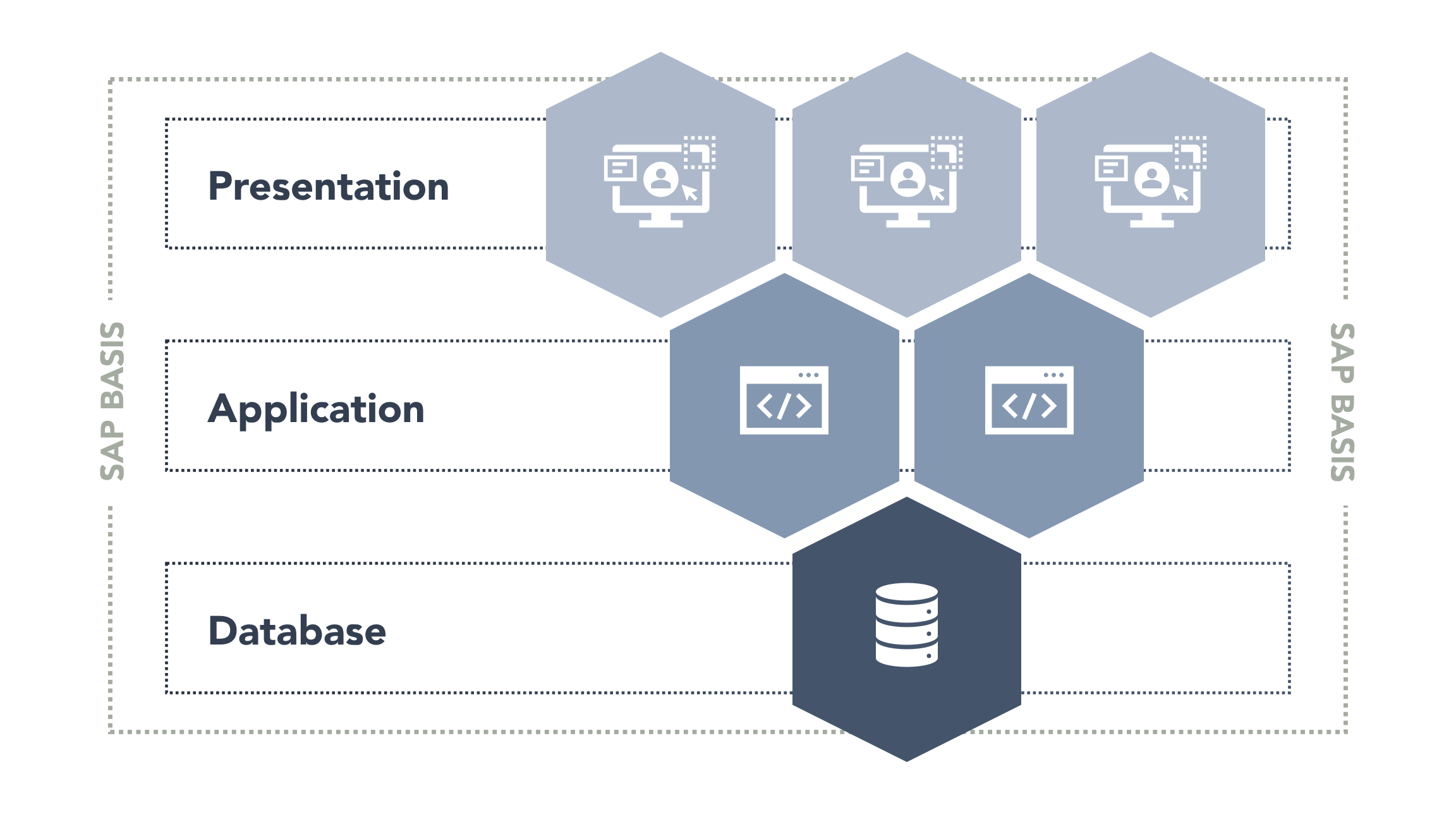
SAP Basis follows a proven three-layer model that ensures structure, stability and scalability in SAP operations. Each of these layers fulfills specific tasks – from data storage and application logic to the user interface.
Database layer
This is where important company data is stored, such as customer information, financial data or stock levels. SAP Basis ensures that the database is installed, configured and maintained correctly so that this data is secure and available. Modern SAP systems increasingly rely on SAP HANA as an in-memory database that processes queries directly in the working memory.
Application layer
The various SAP applications, such as Financial Accounting (FI), Controlling (CO) or Materials Management (MM), run at this level. SAP Basis ensures the distribution of resources and communication between the applications so that they can work together smoothly. An important component of the application layer is the development and customization of business processes using ABAP.
Technically, the application layer consists of one or more application servers on which processes are executed in parallel, as well as a message server that handles communication and load balancing. SAP Basis manages the following:
- Work processes (dialog, update, batch),
- system instances,
- and middleware components such as RFC, IDoc or OData interfaces.
In modern system landscapes, the application layer is increasingly being supplemented by cloud services or container technologies, especially in hybrid operating models or SAP BTP scenarios.
Presentation layer
Users access the SAP applications via this layer. SAP Basis provides the user interface and controls access to the applications so that users can work efficiently.
In addition to the classic SAP GUI for Windows, web-based interfaces are increasingly being used today – e.g. SAP Fiori, SAP GUI for HTML or mobile applications. In addition, single sign-on (SSO), identity management and role-based access are becoming increasingly important – especially in larger organizations with many user profiles and authorization levels.
Tasks of SAP Basis administrators
SAP Basis operation is far more than just “system maintenance”. It determines whether business processes run smoothly, securely and in an audit-proof manner or whether they come to a standstill. Especially in heterogeneous, often historically grown SAP landscapes with production-critical processes, a stable SAP basis is indispensable.
In this context, experienced SAP Basis administrators assume responsibility for a variety of operational and strategic tasks. A selection of practical activities:
For a long time, SAP Solution Manager was used to handle many of these tasks, particularly for change management, system documentation and monitoring. With the announced end of maintenance, companies are increasingly shifting these processes to modern, specialized solutions.
SAP transport management as a key task
SAP Basis is also closely linked to SAP Transport Management, as it enables the secure and structured transport of changes such as program code adaptations, system configurations or database modifications through the various SAP system landscapes. SAP Basis administrators are responsible for efficiently monitoring the transport process and ensuring that all changes are integrated into the systems without errors.
The transport of changes through SAP system landscapes is one of the most risky areas in SAP operations. Whether faulty transports, missing dependencies or incorrect sequences – any inaccuracy can jeopardize productive systems.
Many companies rely on SmartChange to make transport processes predictable, transparent and efficient. The solution has established itself in various industries as a tried-and-tested tool for avoiding manual errors, standardizing processes and significantly reducing operational costs.
Companies with large SAP Basis landscapes are faced with the challenge of efficiently managing increasing data volumes and growing system complexity. Manual transport processes require considerable manpower and are prone to errors. Without automation, several hours a day have to be spent checking and importing SAP transports into different system landscapes. By using a specialized transport management tool, this time expenditure can be significantly reduced – a considerable relief for SAP Basis administration.
A well-managed SAP basis offers companies many advantages:
Challenges in SAP Basis Management
Die Verwaltung von SAP Basis bringt auch einige Herausforderungen mit sich:
Technical aspects of SAP Basis
SAP Basis includes a large number of technical components and functions that are essential for the operation of SAP systems. These include
- SAP NetWeaver: SAP NetWeaver provides the infrastructure for the integration of various applications, communication between the systems and the provision of web services. For example, SAP NetWeaver enables the integration of SAP systems with other applications, such as CRM systems or e-commerce platforms.
- Database systems: SAP systems can be operated with various databases, such as SAP HANA, Oracle, Microsoft SQL Server or IBM DB2. SAP Basis provides the interface between the SAP system and the database. The choice of database system depends on the company’s requirements, e.g. the size of the database, performance or costs.
- Operating systems: SAP systems can be installed on various operating systems, such as Windows, Linux, Unix or IBM i. SAP Basis ensures compatibility between the SAP system and the operating system. The choice of operating system depends on the requirements of the company and the existing infrastructure.
- Security mechanisms: SAP Basis offers a range of security mechanisms to protect the systems against unauthorized access and data loss. These include, for example, user authentication, authorization management and encryption. These mechanisms ensure the confidentiality, integrity and availability of the data.
Best practices for SAP Basis operation
To ensure efficient and secure operation of SAP systems, the following best practices should be taken into account:
The future of SAP Basis is shaped by cloud computing, new technologies and the increasing complexity of SAP systems. Basis administrators must face these challenges and continuously develop their knowledge and skills.
By mastering new technologies such as cloud computing, S/4HANA and BTP, applying best practices and undergoing continuous training, SAP Basis administrators can make an important contribution to the success of their company. They ensure that the SAP systems optimally support the business processes and that the company is successful in the digital transformation. Find out more about the future of SAP Basis.